Never written a program? That's fine. The book starts with "what is a program, anyway?" and by the last chapter you've built a small app of your own that saves its data to a file. It's all in plain, everyday Urdu, and it's free.
You don't need good English and you won't be buried in jargon. If you want to learn, that's enough.
Taking their very first step into programming.
People who have never written a program and don't know where to begin.
Who want to teach children computing in their own language.
Anyone who was held back by English but still wants to learn.
Plenty of people start learning to code and give up in the first week. Usually it's not because the ideas are hard. It's because every book and every video is in English. So this one is in Urdu.
umar = int(input("Umar: ")) if umar >= 13 and umar <= 19: print("Aap teenager hain") else: print("Aap teenager nahi hain")
Each chapter goes one step further than the last. In the final two you put it all together and build a real app.
Why the book was written, who it's for, and how to read it.
پیش لفظWhat computers and programs are, and why Python.
پائتھن پروگرامنگ کا تعارفSet Python up on your computer and run your first program.
ونڈوز میں پائتھن انسٹال کرناLike labelled jars in a kitchen: keeping things under a name.
ویری ایبل"If this, do that, otherwise something else." Teaching the computer to decide.
if · elif · elseDoing the same thing many times without writing it many times.
for · whileLike the buttons in a lift: picking one path out of many.
match · caseNumbers, text, true and false. Everything has a type.
ڈیٹا کی قسمیںLists, tuples, sets and dictionaries: handling lots of things at once.
list · tuple · set · dictWrite the recipe once, then use it as often as you like.
فنکشنReading and writing files, and getting to know CSV and JSON.
File I/O · csv · jsonA complete app that adds, shows, edits and deletes student records, saved in a CSV file.
CRUD app with CSVThe same student records app, now storing its data in JSON.
The same app with JSONWhat you've learned, what to learn next, and a peek at Volume 2.
الوداعThe book uses coloured boxes so you can tell at a glance what you're reading.
A short piece of code, what it prints, and an explanation of what happened.
The important points and the common mistakes to watch out for.
Learn by doing: from easy questions up to challenges, with answers at the end.
Knowledge grows when you share it, so this book is completely free. There's no price, no sign-up and no catch. The full source of the book is on GitHub, where anyone can read it, use it and help make it better.
The second volume is being written now. It picks up exactly where Volume 1 ends and keeps the same style: plain language, lots of examples and plenty of exercises. It will be free too.
Yes, the whole book is free. It's open source, which means its source is open to everyone. Download it, print it and share it with anyone you like.
No. The book starts from the very beginning. The few English words in the code, like print or if, are explained the first time they appear.
No, the book itself is written in Urdu. Only the code is in English letters, because that's what Python understands.
A Windows computer and a little time. Python is free as well, and chapter 2 shows you how to install it step by step.
Yes. Most chapters include the answers at the end, so you can check your own work.
Open an issue on GitHub and mention the volume, chapter and section number. Your help makes the book better for everyone.
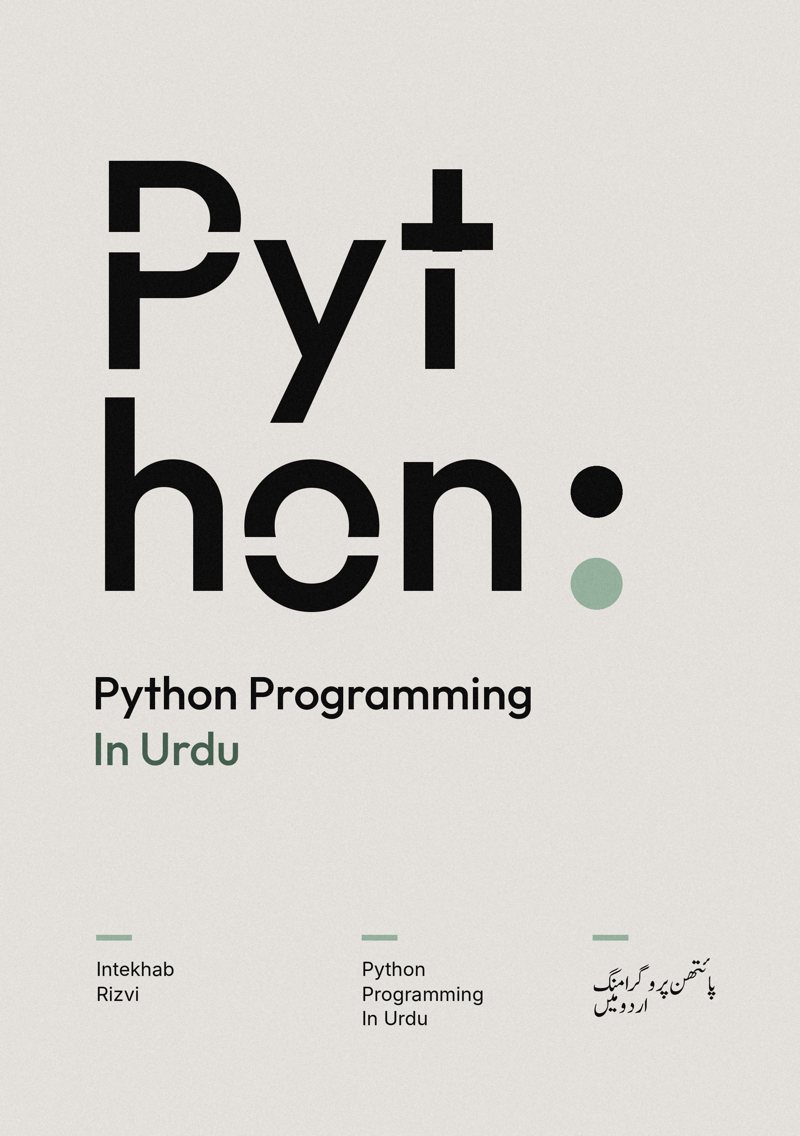
Python Programming in Easy Urdu, Volume 1. Twelve chapters, hundreds of examples, plenty of exercises, and all of it free.